Department Quality Commission
| INSTITUTIONAL INFORMATION | ||||||||||||||||||||||||||||||||||||||||
|
Our Mission As the Faculty of Law, our mission is to provide our students with a comprehensive legal education, preparing them as accomplished jurists dedicated to justice and the public good. In pursuit of this mission, our core priorities comprise: Ethics and Values: Instilling in our students a profound ethical awareness and ensuring steadfast adherence to ethical standards in both their professional practice and personal lives; empowering them to serve as role models committed to justice, equality, and human rights. Comprehensive Legal Education: Establishing a solid academic foundation across all disciplines of law to equip students with profound insight into national and international legal frameworks; augmenting theoretical knowledge with practical training to advance our graduates' ability to analyze and resolve complex, real-world legal challenges. Critical and Analytical Thinking: Cultivating students' competencies to critically evaluate legal disputes, engage in methodical inquiry, and formulate innovative solutions, thereby enabling them to practice competently and adaptively within an evolving global legal sphere. Social Responsibility: Structuring legal education to foster civic consciousness, advance social equity, and educate conscientious professionals attentive to societal challenges. Multifaceted Development: Promoting well-rounded development academically, personally, and intellectually; enabling students to attain excellence in leadership, advocacy, communication, and interprofessional collaboration. Global Perspective: Delivering legal instruction through a global lens to ensure mastery over transnational legal regimes, facilitating cross-cultural discourse, and strengthening students' capacity to interpret and resolve international legal issues. Guided by these principles, our primary objective is to nurture prominent legal professionals capable of exercising leadership in domestic and international arenas, driving substantive and positive transformation throughout society. Our Vision Our vision as the Faculty of Law is to serve as a preeminent institution that contributes to the advancement of jurisprudence nationally and internationally while upholding the rule of law and the administration of justice through an exceptional academic and research environment. In alignment with this vision, our strategic objectives include: Excellence in Education: Offering innovative, interactive pedagogy that synthesizes theoretical foundations with practical immersion, sharpens critical and analytical capabilities, and enables students to attain profound specialization across legal domains. Research and Innovation: Fostering innovative, high-impact scholarly legal research, providing faculty members and students with the opportunities to generate pioneering projects recognized across prestigious national and international scholarly fora. Civic Contribution and Leadership: Graduating jurists who are sensitive to societal needs, committed to ethical integrity and fundamental human rights, dedicated to social justice, and skilled at addressing community legal requirements. Global Partnerships: Cultivating sustained academic cooperation with reputable law schools and institutions worldwide to facilitate scholarly exchange, enrich academic dialogue, and instill an international perspective across our community. Continuous Quality Improvement: Continuously refining educational curricula and research endeavors in accordance with emerging developments, bringing forward-looking methodologies to modern legal challenges. Through these objectives, we strive to position our Faculty of Law as an authoritative center of excellence in legal education and scholarship, preparing graduates who distinguish themselves through exemplary service in all branches of the legal profession. |
||||||||||||||||||||||||||||||||||||||||
 |
||||||||||||||||||||||||||||||||||||||||
|
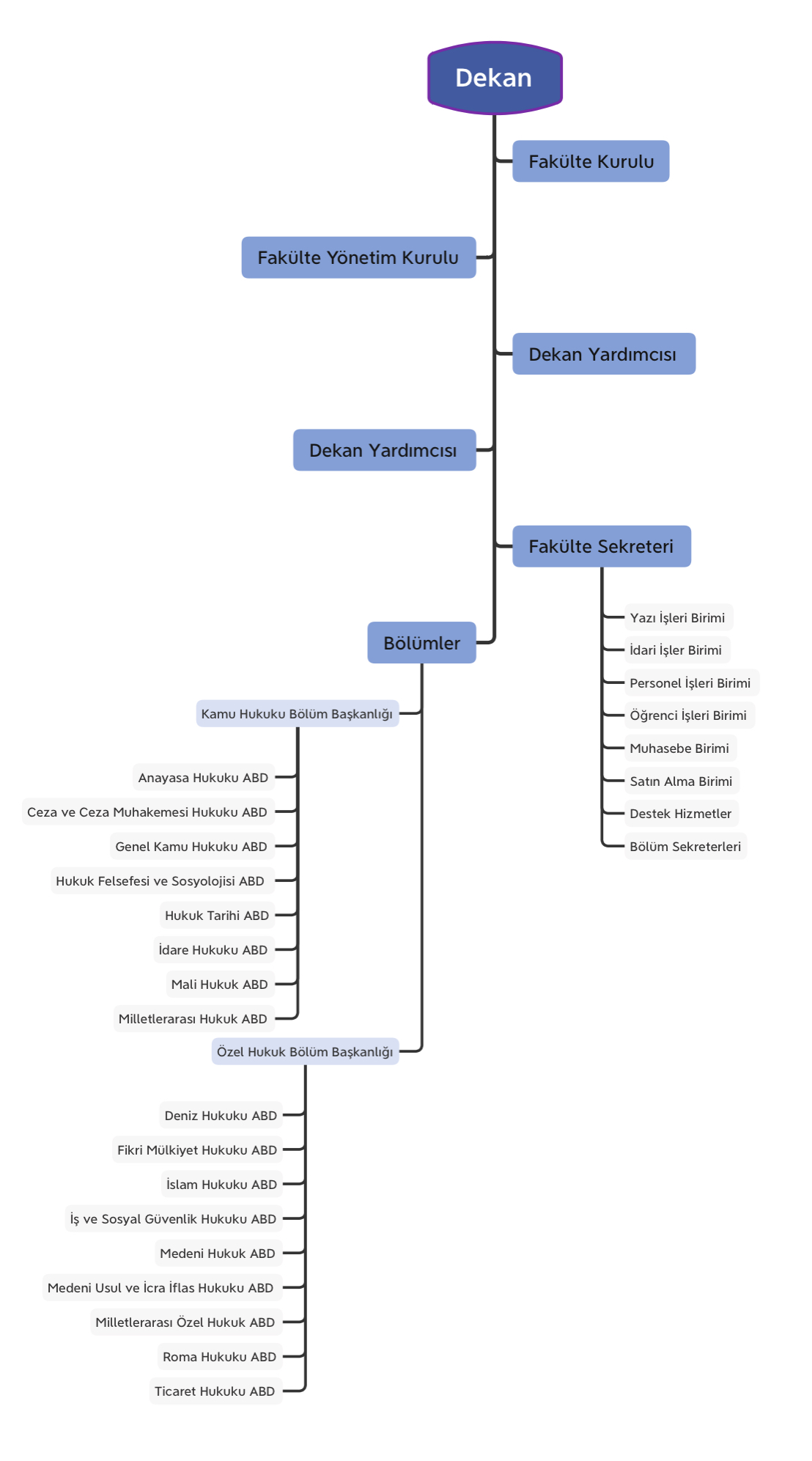
Purpose: To plan, execute, direct, and oversee all institutional operations necessary to realize the Faculty's mission and vision. Duties and Responsibilities: 1. Academic and Administrative Management: Presides over Faculty Boards and oversees the effective implementation of resolutions. Formulates the Faculty’s mission and vision, ensuring institutional alignment among all personnel. Directs analytical budget preparation and secures authorization. Monitors the efficient utilization and inventory control of institutional fixtures and assets. 2. Academic Development and Research: Establishes instructional and scientific research policies. Promotes continuous professional development by organizing conferences, symposia, and academic workshops. Facilitates the procurement and execution of research projects. Directs institutional accreditation processes and strategic planning. 3. Human Resources Management: Plans and recommends academic and administrative staffing requirements. Expands continuing professional training opportunities for faculty and staff. Provides executive guidance to foster organizational efficiency and productivity. 4. Operational Supervision and Reporting: Oversees quality assurance systems and faculty performance evaluations. Guarantees the continuous and orderly execution of curricula, resolving administrative and instructional issues. Presents an annual comprehensive evaluation report regarding the faculty's progress to the Rector. 5. Institutional Representation: Represents the Faculty at high-level institutional and official platforms. Exercises statutory representation and delegated signature authority on behalf of the University. Authorities:
Immediate Supervisor: Vice Rector Subordinate Positions: Vice Deans, Heads of Departments, Faculty Members, Faculty Secretary, Department Secretaries, Dean’s Office Secretariat Required Qualifications:
Accountability: Directly accountable to the Rector of Süleyman Demirel University for discharging all statutory and institutional duties in accordance with the law. Legal Framework:
Purpose: To oversee, coordinate, and supervise educational programs to ensure efficient, high-quality instruction in alignment with the Faculty's mission and the institutional directives of Süleyman Demirel University. Duties and Responsibilities: General Administration:
Academic and Strategic Planning:
Student Affairs:
Coordination and Events:
Authorities:
Administrative Structure: Immediate Supervisor: Dean Subordinate Positions: Heads of Departments, Faculty Members, Faculty Secretary, Department Secretaries, Dean’s Office Staff Required Qualifications:
Accountability: Accountable to the Dean for the diligent execution of all duties in compliance with administrative regulations and law. Legal Framework:
Purpose: To oversee, maintain, and direct the administrative, financial, logistical, and infrastructural resources of the Faculty to ensure operational efficiency in support of academic endeavors. Duties and Responsibilities: General Administration:
Human Resources and Logistics:
Communication and External Relations:
Financial and Administrative Operations:
Authorities:
Administrative Structure:
Required Qualifications:
Accountability:
Legal Framework:
Purpose: To administer, coordinate, and supervise all administrative, financial, and operational support units of the Faculty under the executive leadership of the Dean and Vice Deans, ensuring full statutory compliance. Duties and Responsibilities: Administrative Management and Coordination:
Operational Services:
Academic and Student Support:
Authorities:
Administrative Structure: Immediate Supervisor: Dean and Vice Deans Subordinate Positions: Department Secretaries, Clerical Officers, and Dean’s Office Staff Required Qualifications:
Accountability: Directly accountable to the Dean and Vice Deans for the lawful and effective performance of administrative affairs. Legal Framework:
Purpose: To establish, steer, and supervise educational, instructional, research, and scholarly publishing programs across the Faculty. Duties and Responsibilities:
Authorities:
Immediate Supervisor: Office of the Dean Accountability: Accountable to the Dean for fulfilling statutory academic mandates. Legal Framework:
Purpose: To assist the Dean in administrative, operational, and financial governance, and to implement academic decisions across the Faculty. Duties and Responsibilities:
Authorities:
Immediate Supervisor: Office of the Dean Accountability: Accountable to the Dean for the executive performance of institutional duties. Legal Framework:
Purpose: To organize the executive schedule, manage protocol, and coordinate official correspondence for the Dean. Duties and Responsibilities:
Authorities:
Immediate Supervisor: Office of the Dean Accountability: Accountable to the Dean and the Faculty Secretary. Legal Framework:
Purpose: To administer departmental academic and operational affairs, ensuring the effective delivery of education and scientific research. Duties and Responsibilities:
Authorities:
Immediate Supervisor: Vice Dean (Academic Affairs) Subordinate Positions: Department Faculty Members, Research Assistants, Department Secretaries Accountability: Accountable to the Dean and Vice Deans for the academic progress of the department. Legal Framework:
Purpose: To supervise academic programs, scientific research, and teaching activities within the specific legal discipline, advancing the Faculty's vision. Duties and Responsibilities:
Authorities:
Immediate Supervisor: Vice Head of Department Subordinate Positions: Faculty Members and Research Assistants of the Division, Department Secretaries Required Qualifications:
Accountability: Accountable to the Head of Department. Legal Framework:
Purpose: To support the Head of Department in academic administration and coordinate departmental teaching schedules and research activities. Duties and Responsibilities:
Authorities:
Immediate Supervisor: Head of Department Required Qualifications:
Accountability: Accountable to the Head of Department. Legal Framework:
Purpose: To conduct advanced legal research, deliver high-quality instruction, and mentor students in accordance with the Faculty's mission. Duties and Responsibilities:
Authorities:
Immediate Supervisor: Office of the Dean, Head of Department Required Qualifications:
Accountability: Accountable to the Head of Department and Dean. Legal Framework:
Purpose: To teach designated courses, conduct practical legal workshops, and support the instructional goals of the Faculty. Duties and Responsibilities:
Authorities:
Immediate Supervisor: Head of Department, Program Coordinator Required Qualifications:
Accountability: Accountable to the Head of Department. Legal Framework:
Purpose: To support academic research, assist in instructional administration, and pursue scholarly career development in law. Duties and Responsibilities:
Authorities:
Immediate Supervisor: Head of Department, Head of Division Required Qualifications:
Accountability: Accountable to the Head of Division and Head of Department. Legal Framework:
Purpose: To administer the Faculty's financial transactions, payroll procedures, and procurement operations. Duties and Responsibilities: Accrual Officer:
Procurement Officer:
Authorities:
Immediate Supervisor: Faculty Secretary Required Qualifications:
Accountability: Accountable to the Dean and Faculty Secretary. Legal Framework:
Purpose: To manage official institutional correspondence and ensure systematic records maintenance. Duties and Responsibilities:
Authorities:
Immediate Supervisor: Faculty Secretary Required Qualifications:
Accountability: Accountable to the Dean and Faculty Secretary. Legal Framework:
Purpose: To manage personal service records, leaves, promotions, and human resource correspondence for all staff. Duties and Responsibilities:
Authorities:
Immediate Supervisor: Faculty Secretary Required Qualifications:
Accountability: Accountable to the Dean, Vice Deans, and Faculty Secretary. Legal Framework:
Purpose: To manage undergraduate registration, academic progress records, and student administrative services. Duties and Responsibilities:
Authorities:
Immediate Supervisor: Faculty Secretary Required Qualifications:
Accountability: Accountable to the Dean, Vice Deans, and Faculty Secretary. Legal Framework:
Purpose: To ensure continuous operation, repair, and preventative maintenance across faculty technical systems and buildings. Duties and Responsibilities:
Authorities:
Immediate Supervisor: Faculty Secretary Required Qualifications:
Accountability: Accountable to the Dean, Vice Deans, and Faculty Secretary. Legal Framework:
Purpose: To support logistical and operational functions, maintaining a clean, orderly, and productive academic environment. Duties and Responsibilities:
Authorities:
Immediate Supervisor: Faculty Secretary Required Qualifications:
Accountability: Accountable to the Dean, Vice Deans, Heads of Departments, and Faculty Secretary. Legal Framework:
Purpose: To conduct official correspondence, record-keeping, and clerical workflows for academic departments. Duties and Responsibilities:
Authorities: Authority to process departmental academic documents and manage office workflows. Immediate Supervisor: Faculty Secretary Required Qualifications:
Accountability: Accountable to the Dean, Vice Deans, Heads of Departments, and Faculty Secretary. Legal Framework:
Purpose: To record, track, manage, and audit all physical fixtures, assets, and movable properties belonging to the Faculty. Duties and Responsibilities:
Authorities:
Immediate Supervisor: Faculty Secretary Required Qualifications:
Accountability: Accountable to the Dean, Vice Deans, Heads of Departments, and Faculty Secretary. Legal Framework:
|
||||||||||||||||||||||||||||||||||||||||
|
Our Quality Policy: As Süleyman Demirel University Faculty of Law, we adopt a philosophy dedicated to academic excellence and public value creation. In accordance with this principle, our quality policy emphasizes continuous improvement and participatory governance across all dimensions, from student-centered pedagogy to scholarly distinction, ethical leadership, and societal contribution. Student-Centered Education: Academic curricula are continuously evaluated and updated based on student feedback and legal developments. Instructional methodologies are designed to develop critical inquiry, dispute resolution, and legal analysis. Dedicated academic advisement systems provide personalized academic roadmaps for every student. Continuous Quality Improvement: Instructional and administrative operations are periodically reviewed to formulate comprehensive enhancement plans. Working via the Faculty Quality and Accreditation Commission, enhancement proposals are gathered, evaluated, and measured against rigorous benchmarks, with outcomes shared transparently. Academic Distinction: Continuous scholarly development of our academic staff is systematically promoted through institutional support mechanisms. Active engagement in domestic and international academic accreditation protocols is consistently pursued. Participatory Governance: Regular consultations and structured feedback mechanisms are conducted to engage students, academic staff, and administrative personnel in decision-making processes. Broad-based committees and working groups facilitate effective institutional governance. Ethical Values: Education, scholarship, and research are firmly anchored in academic integrity, transparency, and accountability. Preventive frameworks and ethical training sessions are implemented across all academic and administrative divisions. Civic Engagement: The Faculty actively contributes to society by organizing community outreach projects, legal aid conferences, and public seminars. Dedicated legal clinics are established to provide legal assistance to underserved groups. |
||||||||||||||||||||||||||||||||||||||||
|
Our Research Policy: Süleyman Demirel University Faculty of Law is committed to achieving scholarly distinction in scientific legal research. Our research policy is dedicated to advancing jurisprudence by promoting rigorous and innovative scholarship, fostering interdisciplinary partnerships, and disseminating legal knowledge for the benefit of society. Research Quality and Innovation: Modern academic infrastructure and technical support are provided to facilitate pioneering legal scholarship. Proactive institutional funding strategies are maintained to support distinguished research initiatives. Interdisciplinary Collaboration: Collaborative initiatives with other university faculties and academic disciplines enrich legal research with multifaceted perspectives. Recurring interdisciplinary symposia and academic panels are organized regularly. Scholarly Resources and Infrastructure: Seamless access to extensive library collections, primary legal databases, and international research repositories is guaranteed for faculty and students alike. Technical and administrative support mechanisms are provided across all research phases. National and International Cooperation: Proactive policies encourage faculty members to establish scholarly partnerships globally and nationally. Joint research projects, academic exchanges, and collaborative initiatives are systematically cultivated. Ethical and Regulatory Standards: Rigorous ethical oversight and comprehensive procedural guidance ensure that all scholarly inquiries comply with academic ethics and relevant legislation. Continuous research methodology training is provided. Dissemination of Knowledge: Research findings are disseminated to the international scientific community through our Faculty Journal and indexed peer-reviewed journals. In addition, research findings are shared through public forums to elevate legal literacy throughout the community. |
||||||||||||||||||||||||||||||||||||||||
|
||||||||||||||||||||||||||||||||||||||||
|
FACULTY STAKEHOLDERS LIST (INFLUENCE / IMPORTANCE MATRIX) TABLE
FACULTY STAKEHOLDERS (INFLUENCE / IMPORTANCE ANALYSIS) The evaluations below articulate the institutional impact of each stakeholder group on our Faculty and delineate why their partnership is critical to our academic mission. Internal Stakeholders: 1. Students: Influence: High / Importance: High Influence: Student achievements, evaluations, and programmatic feedback directly reflect and shape the instructional quality of the Faculty. Importance: Students represent the central focus of our educational mission; their satisfaction and intellectual growth are fundamental to our institutional success. 2. Academic Staff: Influence: High / Importance: High Influence: The pedagogical excellence, scholarship, and research productivity of academic staff determine the Faculty's scientific profile and reputation. Importance: Academic staff serve as the foundation of instructional rigor, scholarly discovery, and the maintenance of high academic standards. 3. Administrative Staff: Influence: Moderate / Importance: Moderate Influence: Administrative personnel guarantee the uninterrupted, systematic execution of daily operational and logistical workflows. Importance: Essential for maintaining administrative services, student support operations, and operational efficiency across the Faculty. 4. Faculty Administration: Influence: High / Importance: Very High Influence: Executive leadership determines strategic institutional policies, resource allocations, and long-term developmental priorities. Importance: Decisive governance is imperative for sustainability, institutional accreditation, and academic excellence. 5. Faculty Quality and Accreditation Commission: Influence: Moderate / Importance: High Influence: Evaluates internal quality benchmarks and guides continuous improvement across academic and operational units. Importance: Ensures sustainable compliance with national and international quality assurance standards and accreditation frameworks. External Stakeholders: 1. Alumni: Influence: Moderate / Importance: High Influence: The professional prestige, judicial leadership, and feedback of our alumni reinforce the Faculty's standing and external reputation. 2. Judicial Institutions (Supreme Courts, Courthouses, Ministry of Justice, Justice Academy of Türkiye, Isparta Chief Public Prosecutor's Office, Isparta Administrative Court Presidency) and Council of Judges and Prosecutors: Influence: High / Importance: High Influence: Evolving jurisprudence and statutory developments directly inform curriculum design and applied legal training. Importance: Collaboration with judicial bodies ensures our curriculum remains closely attuned to the operational realities of the Turkish legal system. 3. Bar Associations (Union of Turkish Bar Associations, Isparta Bar Association), Notaries Union, 11th Notary Public of Isparta Veysel Gühan, and Law Firms: Influence: High / Importance: High Influence: Legal practitioners and professional chambers provide critical internships, vocational immersion, and direct post-graduate employment pathways. Practical perspectives offered by institutions such as the 11th Notary Public of Isparta Veysel Gühan bolster vocational preparedness and applied clinical experience. Importance: These professional bodies align our educational offerings with practice standards, facilitating graduates' seamless entry into legal practice. 4. Other Universities and Law Faculties: Influence: Moderate / Importance: Moderate Influence: Inter-institutional collaborations, symposia, and academic mobility enhance scholarly discourse and faculty development. Importance: Academic exchange and collaborative scholarship foster pedagogical innovation and nationwide institutional synergy. 5. Official Accreditation Bodies: Influence: High / Importance: Very High While a specialized national accreditation body specifically for legal education in Türkiye is currently developing, these agencies will establish mandatory standards once formalized. Concurrently, comparative institutional research regarding international legal accreditation councils is in progress. Influence: Accreditation bodies set mandatory educational and governance standards, directly guiding quality enhancement frameworks. Importance: Formal accreditation ensures international credibility, academic rigor, and nationwide prestige. 6. Non-Governmental Organizations (NGOs): Influence: Moderate / Importance: Moderate Influence: Partnering with NGOs expands the civic dimensions of legal education and advances public interest advocacy. Importance: Collaborative projects with civil society promote human rights awareness, public legal service, and social accountability. 7. Parents and Families of Students: Influence: Low / Importance: Moderate Influence: Families play an influential role during university selection, matriculation decisions, and students' overall well-being. Importance: Sustained stakeholder satisfaction among families reinforces the Faculty’s public trust and applicant preference rates. |
||||||||||||||||||||||||||||||||||||||||
 |
||||||||||||||||||||||||||||||||||||||||
| WORKFLOW CHARTS | ||||||||||||||||||||||||||||||||||||||||
| Departmental Workflow Charts | ||||||||||||||||||||||||||||||||||||||||
| ACADEMIC & ADMINISTRATIVE WORK CALENDAR | ||||||||||||||||||||||||||||||||||||||||
| Faculty Operational Calendar | ||||||||||||||||||||||||||||||||||||||||
| GUIDELINES, REGULATIONS, DIRECTIVES, AND PROCEDURAL PRINCIPLES | ||||||||||||||||||||||||||||||||||||||||
| Süleyman Demirel University Faculty of Law Education, Instruction, and Examination Regulation | ||||||||||||||||||||||||||||||||||||||||
| Directive on the Establishment of the Quality Assurance System and the Operating Procedures of the Quality Commission | ||||||||||||||||||||||||||||||||||||||||
| Regulation on Higher Education Quality Assurance and the Higher Education Quality Council (THEQC) | ||||||||||||||||||||||||||||||||||||||||
| SDU Distance Education Recommendation Guide | ||||||||||||||||||||||||||||||||||||||||
| SDU Career Representative Directive | ||||||||||||||||||||||||||||||||||||||||
| Internal Unit Self-Evaluation Report Preparation Guide | ||||||||||||||||||||||||||||||||||||||||
| Süleyman Demirel University Directive on Advisory Boards and Operating Principles | ||||||||||||||||||||||||||||||||||||||||
| Süleyman Demirel University Institutional Transformation Guide | ||||||||||||||||||||||||||||||||||||||||
| COMMISSIONS AND COORDINATORSHIPS | ||||||||||||||||||||||||||||||||||||||||
|
Prof. Dr. Yüksel METİN (Commission Chair) Prof. Dr. Faruk TURHAN Prof. Dr. Fahrettin ÖNDER Asst. Prof. Dr. Didem ERDOĞAN Asst. Prof. Dr. Rukiye KAHYA Res. Asst. Kübra ÇAĞLAYAN ÜNLEN Res. Asst. İlayda YILMAZ Res. Asst. İzel AVCI BOLAT Res. Asst. Gökhan ÜNLEN Res. Asst. Tansu GÜNDOĞDU Faculty Secretary: Emine DİKMEN Faculty Student Representative: Yasin YILMAZ |
||||||||||||||||||||||||||||||||||||||||
|
Asst. Prof. Dr. Burcu ÖZKUL (Commission Chair) Asst. Prof. Dr. Dadaşhan Celaleddin KAVAS Asst. Prof. Dr. İsmail AKBAŞ Res. Asst. Kıvanç ŞENTÜRK |
||||||||||||||||||||||||||||||||||||||||
|
Asst. Prof. Dr. Didem ERDOĞAN
Asst. Prof. Dr. Ayşe Yaman KAPLAN
Asst. Prof. Dr. Dursun ÇELİK
Asst. Prof. Dr. Burak ERECE
Asst. Prof. Dr. Hikmet TOKGÖZ
Asst. Prof. Dr. Serra KOCAR KELEŞ
Assoc. Prof. Dr. Cannur ERCAN ÇATAKLI
Asst. Prof. Dr. Selim CİĞER
Asst. Prof. Dr. Selen UNCULAR
Asst. Prof. Dr. Nihat Seyhun ALP
Asst. Prof. Dr. Burcu ÖZKUL
Asst. Prof. Dr. İsmahan GÜLEN ERDOĞAN
Asst. Prof. Dr. Neslihan DEMİRKOL
Assoc. Prof. Dr. Raziye AKSU
Asst. Prof. Dr. Ömer ÇON
Asst. Prof. Dr. Barış MESCİ
Asst. Prof. Dr. Hasan ÇATAKLI
Asst. Prof. Dr. Dadaşhan Celaleddin KAVAS
Asst. Prof. Dr. Rukiye KAHYA
Asst. Prof. Dr. Makbule Ceren ERDEM
Asst. Prof. Dr. İsmail AKBAŞ
Asst. Prof. Dr. Esin YÜĞRÜK YÜCEKAYA
Assoc. Prof. Dr. Meltem İNELİ CİĞER
Assoc. Prof. Dr. Salih KORKMAZ
Asst. Prof. Dr. Vahdettin AYDIN
Asst. Prof. Dr. Zehra KORKMAZ
Asst. Prof. Dr. Fulya MERCİMEK
Asst. Prof. Dr. Semiha ÖNDER BALAMAN
Asst. Prof. Dr. Özgenur YİĞİT AKSU
Asst. Prof. Dr. Gökçe TUNÇ AYDIN
Asst. Prof. Dr. Ömer YILDIRIM
|
||||||||||||||||||||||||||||||||||||||||
|
Prof. Dr. Yüksel METİN Asst. Prof. Dr. Didem ERDOĞAN Asst. Prof. Dr. Dursun ÇELİK |
||||||||||||||||||||||||||||||||||||||||
|
|
||||||||||||||||||||||||||||||||||||||||
|
|
||||||||||||||||||||||||||||||||||||||||
|
|
||||||||||||||||||||||||||||||||||||||||
|
|
||||||||||||||||||||||||||||||||||||||||
|
|
||||||||||||||||||||||||||||||||||||||||
|
|
||||||||||||||||||||||||||||||||||||||||
|
|
||||||||||||||||||||||||||||||||||||||||
|
||||||||||||||||||||||||||||||||||||||||
|
|
||||||||||||||||||||||||||||||||||||||||
|
|
||||||||||||||||||||||||||||||||||||||||
|
|
||||||||||||||||||||||||||||||||||||||||
|
|
||||||||||||||||||||||||||||||||||||||||
|
|
||||||||||||||||||||||||||||||||||||||||
|
|
||||||||||||||||||||||||||||||||||||||||
|
|
||||||||||||||||||||||||||||||||||||||||
|
|
||||||||||||||||||||||||||||||||||||||||
|
|
||||||||||||||||||||||||||||||||||||||||
|
|
||||||||||||||||||||||||||||||||||||||||
|
|
||||||||||||||||||||||||||||||||||||||||
|
|
||||||||||||||||||||||||||||||||||||||||
|
|
||||||||||||||||||||||||||||||||||||||||
| REPORTS | ||||||||||||||||||||||||||||||||||||||||
|
|
||||||||||||||||||||||||||||||||||||||||
|
|
||||||||||||||||||||||||||||||||||||||||
|
|
||||||||||||||||||||||||||||||||||||||||
|
|
||||||||||||||||||||||||||||||||||||||||
|
|
||||||||||||||||||||||||||||||||||||||||
| RECORDS OF PROCEEDINGS | ||||||||||||||||||||||||||||||||||||||||
|
Proceedings of December 24, 2025 Proceedings of November 5, 2025 Proceedings of November 4, 2025 Proceedings of April 8, 2025 Proceedings of December 24, 2024 Proceedings of October 23, 2024 Proceedings of May 29, 2024 Proceedings of December 27, 2023 Proceedings of December 21, 2023 Proceedings of June 6, 2022 Proceedings of February 2, 2022 Proceedings of December 2, 2021 Proceedings of October 7, 2021 Proceedings of July 28, 2020
|
||||||||||||||||||||||||||||||||||||||||
|
|
||||||||||||||||||||||||||||||||||||||||
|
|
||||||||||||||||||||||||||||||||||||||||
|
|
||||||||||||||||||||||||||||||||||||||||
|
|
||||||||||||||||||||||||||||||||||||||||
|
Proceedings of Internal Stakeholder Consultation of the Institute of Social Sciences, Department of Public Law, Dated April 30, 2025 Proceedings of April 30, 2025 (Peer Review on Evaluation of Proposed Courses for Public Law Undergraduate [Elective], Master's, and Ph.D. Programs) Proceedings of April 30, 2025 (Peer Review on Evaluation of Proposed Courses for Private Law Undergraduate [Elective], Master's, and Ph.D. Programs) Proceedings of Internal Stakeholder Consultation of the Institute of Social Sciences, Department of Private Law, Dated April 29, 2025
|
||||||||||||||||||||||||||||||||||||||||
|
Proceedings of May 1, 2025 Proceedings of April 29, 2025 (External Stakeholder Consultation on Evaluation of Proposed Courses for Private and Public Law Undergraduate, Master's, and Ph.D. Programs) Proceedings of Alumni Assembly of the Institute of Social Sciences, Department of Public Law, Dated April 29, 2025 Proceedings of Alumni Assembly of the Institute of Social Sciences, Department of Private Law, Dated April 29, 2025
|
||||||||||||||||||||||||||||||||||||||||
|
|
||||||||||||||||||||||||||||||||||||||||
| Faculty Executive Board Decrees and Resolutions | ||||||||||||||||||||||||||||||||||||||||
| CONTINUOUS QUALITY IMPROVEMENTS | ||||||||||||||||||||||||||||||||||||||||
| 2026 Quality Improvements | ||||||||||||||||||||||||||||||||||||||||
| 2025 Quality Improvements | ||||||||||||||||||||||||||||||||||||||||
| 2024 Quality Improvements | ||||||||||||||||||||||||||||||||||||||||
| 2023 Quality Improvements | ||||||||||||||||||||||||||||||||||||||||
| 2022 Quality Improvements | ||||||||||||||||||||||||||||||||||||||||
| All Quality Improvements | ||||||||||||||||||||||||||||||||||||||||
| CIVIC ENGAGEMENT AND SOCIAL IMPACT ACTIVITIES | ||||||||||||||||||||||||||||||||||||||||
| 2025 Social Contribution Activities Report | ||||||||||||||||||||||||||||||||||||||||
| 2024 Social Contribution Activities Report | ||||||||||||||||||||||||||||||||||||||||
| 2023 Social Contribution Activities Report | ||||||||||||||||||||||||||||||||||||||||
| STAKEHOLDER FEEDBACK AND EVALUATION SURVEYS | ||||||||||||||||||||||||||||||||||||||||
|
|
||||||||||||||||||||||||||||||||||||||||
|
2025-2026 Academic Year Faculty of Law Student Experience Survey Report General Experience Survey Report Conducted for First-Year Law Students in the First Six Months of the 2024-2025 Academic Year General Experience Survey Report Conducted for Fourth-Year Law Students in the Final Term of the 2024-2025 Academic Year 2023-2024 Academic Year Faculty of Law Student Experience Survey Report
|
||||||||||||||||||||||||||||||||||||||||
|
|
||||||||||||||||||||||||||||||||||||||||
|
|
||||||||||||||||||||||||||||||||||||||||
| COOPERATION PROTOCOLS AND INSTITUTIONAL PARTNERSHIPS | ||||||||||||||||||||||||||||||||||||||||
| Cooperation Protocol with Isparta Bar Association on the Rights of Persons with Disabilities | ||||||||||||||||||||||||||||||||||||||||
| Master's Degree Education Cooperation Protocol in Public and Private Law Between SDU Faculty of Law, Isparta Chief Public Prosecutor's Office, and Burdur Chief Public Prosecutor's Office | ||||||||||||||||||||||||||||||||||||||||
| Cooperation Protocol with the Directorate General for Copyright | ||||||||||||||||||||||||||||||||||||||||
| Cooperation Protocol Between Isparta Chief Public Prosecutor's Office, Isparta Bar Association, and SDU Rectorate on Legal Clinic Field Practice for SDU Law Students under Law No. 6284 | ||||||||||||||||||||||||||||||||||||||||